
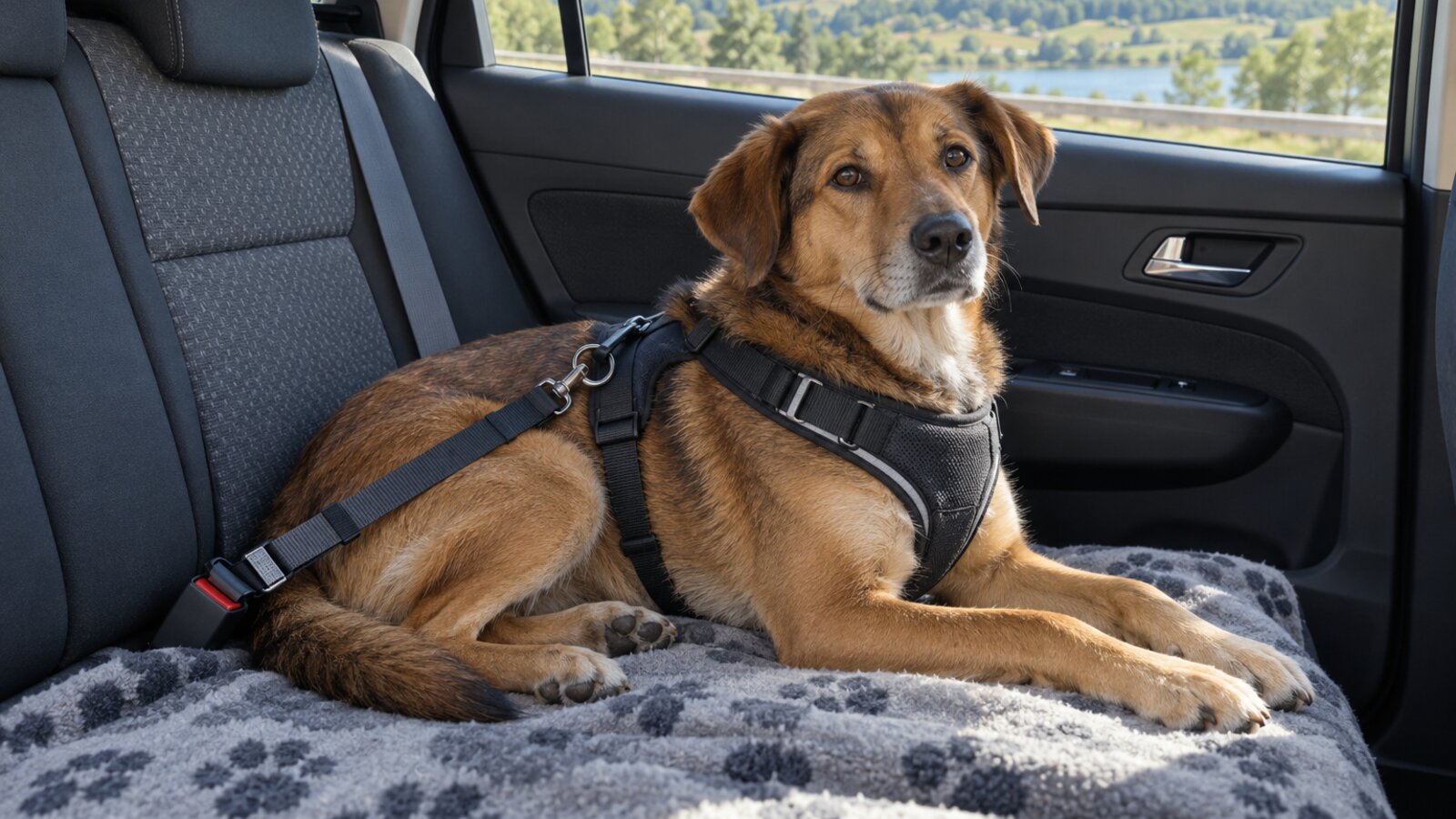
Most dogs handle a trip fine. Some get an upset stomach on day one and keep it the whole way: vomiting in the back seat, loose stool at a rest stop, or a dog who will not touch dinner at the motel. Food is the part you can control.
The plan is simple. Feed what your dog already eats, on the schedule your dog already knows, and keep the risky food out of reach. The details below are written for road trips. The same plan works if you ever have to leave home fast in an evacuation, so it is worth setting up once.
Why trips upset a dog’s stomach
Dogs like routine. Same food, same bowl, same time. A trip changes all three at once, and it adds a moving car, new smells, and a new place to sleep. Some dogs eat less on the road. Others eat normally and still get diarrhea.
Car sickness is part of it for some dogs. VCA Animal Hospitals says in its page on motion sickness in dogs that “motion or car sickness is more common in younger dogs than in adults.” Puppies often outgrow it by about one year old. Many adult dogs still get anxious or nauseous in the car because they are not used to riding in it.
Bring the food your dog already eats
The safest travel food is the food in your dog’s bowl right now. Same brand, same formula. A sudden switch can cause stomach trouble on its own. The Animal Medical Center in New York warns that a sudden food switch “can upset your pet’s digestive system” and recommends moving to a new food over about 10 days. A road trip is not the time to start that.
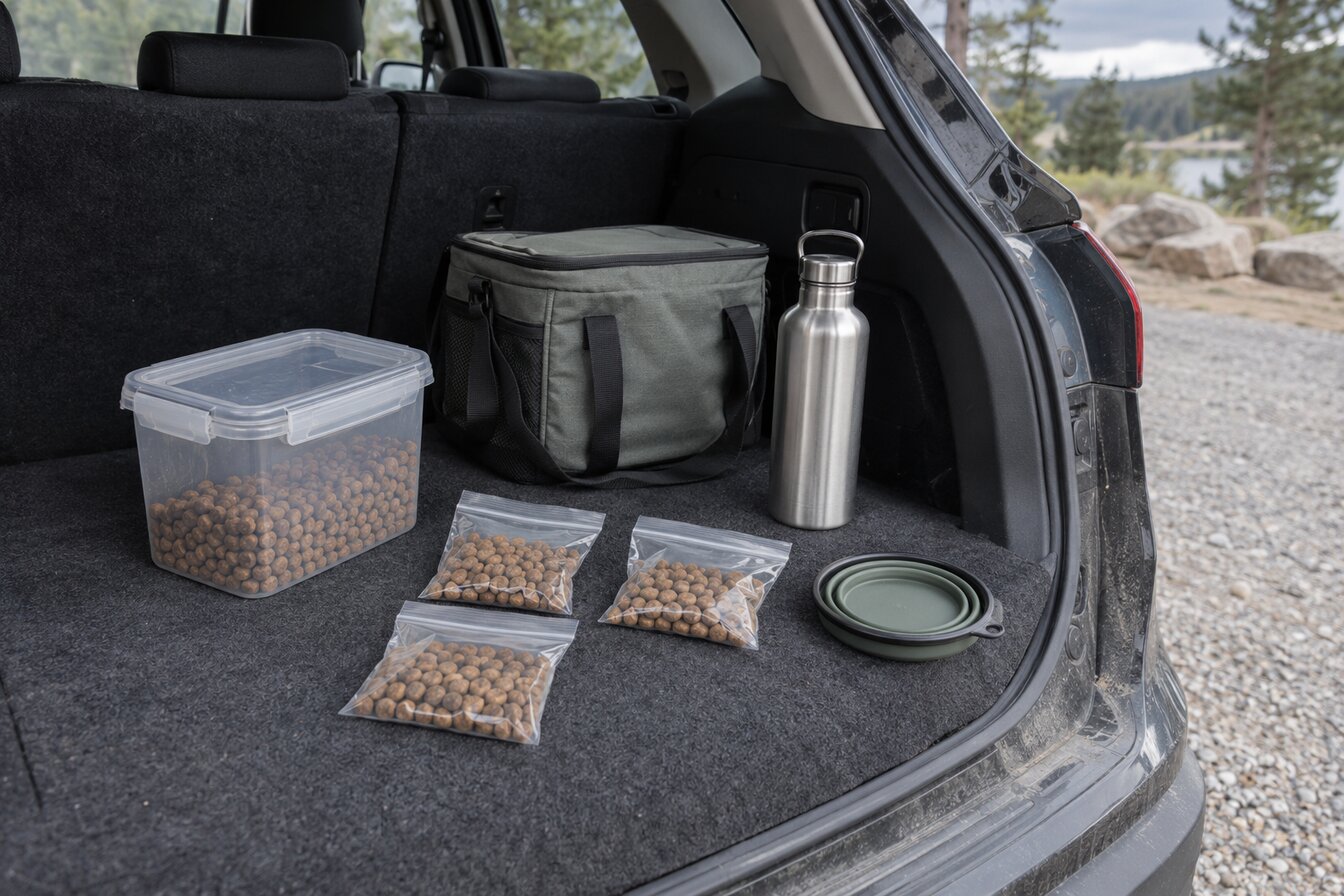
Pack enough for the whole trip plus a few extra days. Your dog’s food may not be sold where you are going, and trips run long. Keep it in its original bag inside an airtight container, or portion each meal into its own bag so feeding at a stop is quick.
Dry food, wet food, and prescription diets
Dry food
Kibble is the easiest food to travel with. It is light, it measures out fast, and it does not need a cooler. It still does not belong in a hot trunk all day. Tufts University’s veterinary nutrition team says pet food should be kept in cool temperatures, ideally under 80°F, because heat and humidity can turn the fats rancid and break down nutrients. Keep the food in the cabin with you, out of direct sun.
Wet food
Canned food takes more care. The same Tufts guide to storing pet food says: “Once you open a can of pet food, refrigerate any unused food immediately.” Opened cans should be thrown out after 72 hours, even in the fridge. On the road that means a cooler with ice, or small cans your dog finishes in one meal.
Prescription diets
Dogs on a veterinary diet for kidney, liver, or digestive disease should stay on it while you travel. A prescription diet may not be easy to buy on the road, so count out every meal before you go. Before traveling, it is a good idea to schedule a veterinary check-up to review your dog’s current condition, confirm that the prescribed diet is still appropriate, and make sure you have enough food and any necessary medication for the entire trip.
Treats
Bring the treats your dog already knows, and fewer than you think you need. VCA’s guidance on dog treats is that 90 percent of daily calories should come from your dog’s complete and balanced food, with treats and snacks making up no more than the other 10 percent. A long day in the car makes it easy to hand out a treat at every stop. Those add up fast.
When to feed before the car ride
There is no single right number here, and the sources do not agree. For dogs that get carsick, VCA suggests you “withhold food for up to 8 hours before travel.” The American Kennel Club goes further and suggests up to 12 hours if possible. The CDC’s pet travel page suggests feeding your pet 3 to 4 hours before you leave.
What they agree on is that a full stomach in a moving car is a bad mix for a dog that gets sick. For most dogs, a light meal a few hours before you leave and the main meal once you stop for the night works well. If your dog has been carsick before, ask your vet what timing to use and whether anything else would help. Keep water available the whole time. The AKC is clear on that point: “But don’t restrict access to fresh water.”
Water at every stop
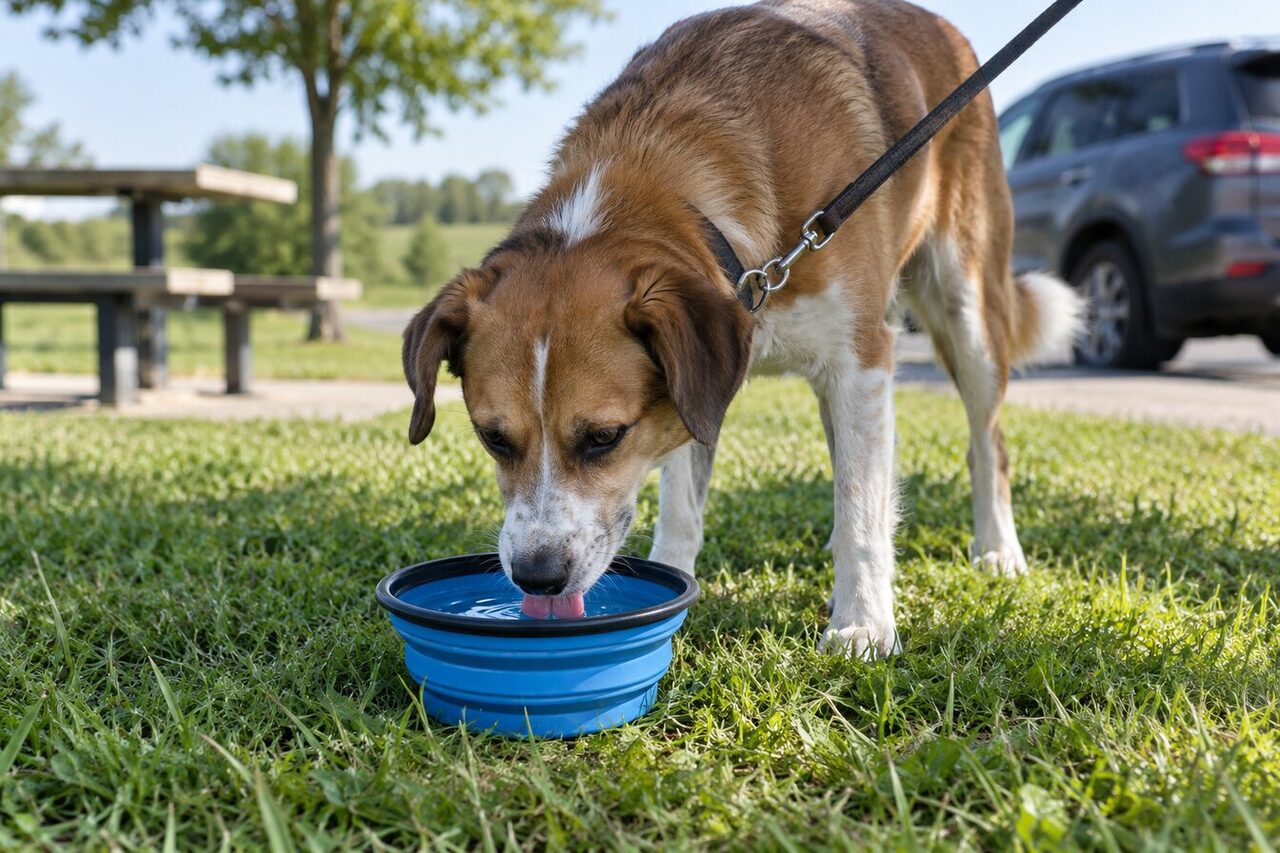
Offer water at every stop, in a bowl your dog knows or a collapsible travel bowl. Some dogs will not drink much in a strange place, so offer it again a little later.
Bring water from home or bottled water, and do not let your dog drink from ponds, puddles, or streams along the way. The CDC lists drinking from “slow-moving or stagnant water sources, like ponds, rivers, lakes, or streams” as one way dogs catch leptospirosis, a bacterial infection.
When you stop to eat, do not leave your dog in the parked car. Our guide on a dog in a hot car explains why a short stop can still be dangerous.
Foods to keep out of reach
Road trip food is the biggest risk. Gas station snacks, fast food, and an open bag of trail mix in the cup holder are all within reach of a dog in the back seat. The ASPCA’s list of people foods to avoid covers the ones that show up most often in a car:
- Chocolate and coffee, which contain stimulants called methylxanthines
- Grapes and raisins, which can cause kidney damage
- Onions, garlic, and chives, which can damage red blood cells
- Xylitol, a sweetener in gum, candy, baked goods, and toothpaste, which can cause low blood sugar and possibly liver damage
Xylitol is the one to watch in a car, where gum and mints sit in cup holders and bags. The FDA says the drop in blood sugar “can occur within 10 to 60 minutes of eating the xylitol.” If your dog gets into any of these, check our list of dog poisoning symptoms and call a poison hotline or your vet right away.
Fatty food is a slower problem. Burger scraps, fries, and other fast food are much richer than what your dog usually eats. The ASPCA says fatty foods “can cause vomiting and diarrhea, and potentially pancreatitis in some pets,” and the Merck Veterinary Manual names large amounts of table scraps as a common risk factor for pancreatitis in dogs. Skip the scraps for the whole trip.
If your dog will not eat
A skipped meal on travel day is not unusual. Offer the normal meal at the normal time, in a quiet spot, in the bowl from home. If your dog walks away, pick the bowl up and try again at the next mealtime.
Do not switch to table food to get your dog eating. Rich food is more likely to upset the stomach, for the reasons above. If your dog skips meals for more than a day, or if not eating comes with repeated vomiting, diarrhea, or low energy, call a vet.
Dogs with sensitive stomachs
If your dog has a history of stomach trouble, plan more tightly. Keep meal times the same as at home. Do not try new treats or chews on the trip. Pack extra of the usual food in case a meal gets spilled or spoiled.
Know your dog’s normal before you leave: how many meals a day, how much, and what a normal stool looks like. On the road, that baseline helps you spot a problem early instead of guessing.
After you arrive
Keep the same food, bowl, and feeding times at your destination. If you planned to change your dog’s food anyway, wait until the trip is over and your dog is settled. Then switch slowly, over about 10 days.
One food kit for trips and emergencies
A travel food kit is close to what your dog needs in an evacuation: several days of the usual food in a sealed container, water, a bowl, any medication, and copies of records. The CDC’s pet travel checklist covers the same basics, including water, food, a bowl, a leash, waste bags, medication and first aid supplies, and travel documents such as proof of rabies vaccination.
Build that kit once and you can grab it for a road trip or for an emergency. Our pet emergency kit guide covers the rest of what goes in it.